By Anim Rahman · 12 September 2026
The Journey: How I Turned Nine Years in Australia Into a Game
How I turned nine years in Australia into The Journey, a personal browser game, and what building it with AI taught me about storytelling and product design.
After 9 years in this beautiful country - Australia, I finally got my permanent residency granted.
To mark the moment, I built something personal: The Journey, a browser game inspired by my life, from Bangladesh to Australia.
It brings together pixel art, interactive storytelling and AI-assisted game development. It also gave me a way to revisit the experiences behind that milestone: studying, building a career, getting married, travelling, waiting, and continuing through uncertainty.
There is now a small game character carrying a surprisingly large amount of my life story.
Finding a format for the story
A milestone announcement gives people the outcome. I wanted to share some of the path that led there.
The Journey takes that path and turns it into an experience people can move through. There are six playable chapters, alongside a Story Mode for visitors who would prefer to watch the narrative unfold.
Those two ways of experiencing the project became an important product decision.
Some visitors enjoy exploring a game and learning its controls. Others arrive because they know me, are curious about the story, or have a few minutes between meetings. Giving them a choice makes room for different interests and levels of familiarity with games.
The format needed to serve the people arriving at it. You can play the six-chapter adventure or watch Story Mode through the same entry screen.
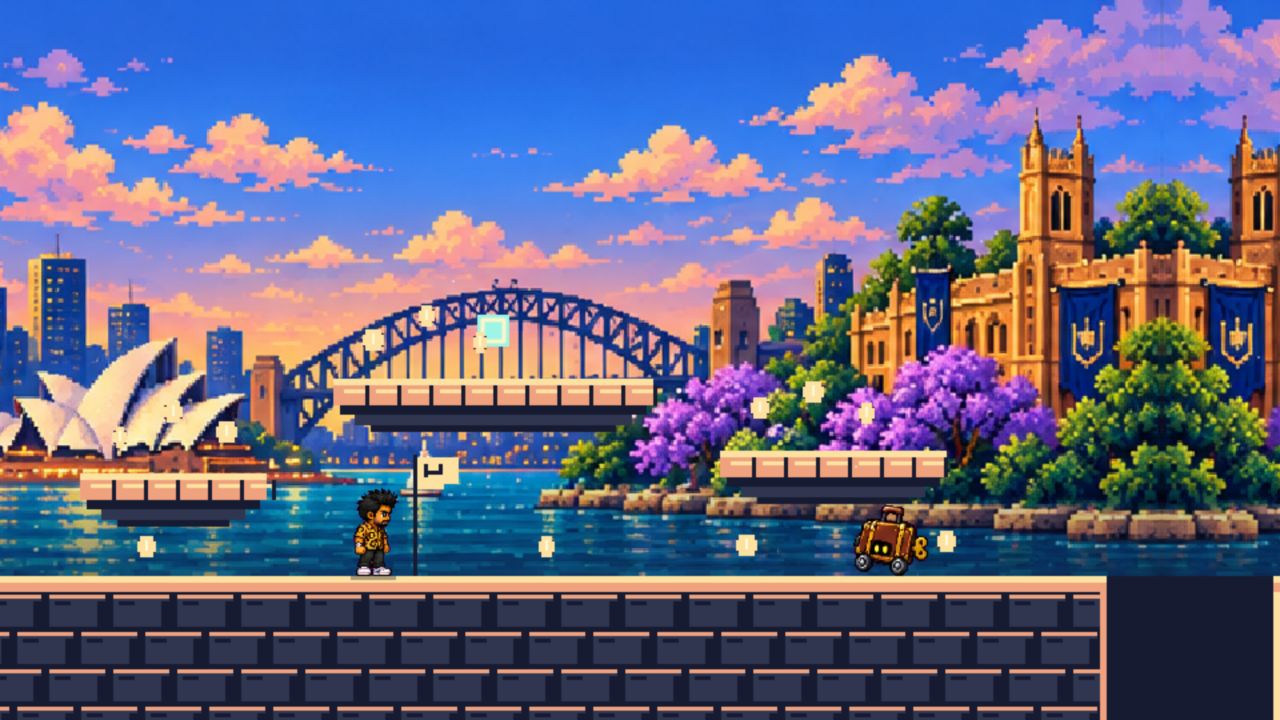
Inside the game: platforming and boss encounters
The playable route includes jumping between platforms, finding keepsakes, and learning when to use Action. In the first chapter, that leads to Gearbox Captain, a clockwork boss with sweep, slam and rush phases. The encounter gives the player a concrete challenge to work through before moving on.
These enemies belong to the game’s fictional adventure layer. The personal milestones come from my timeline; the boss encounters give those chapters a playable rhythm.
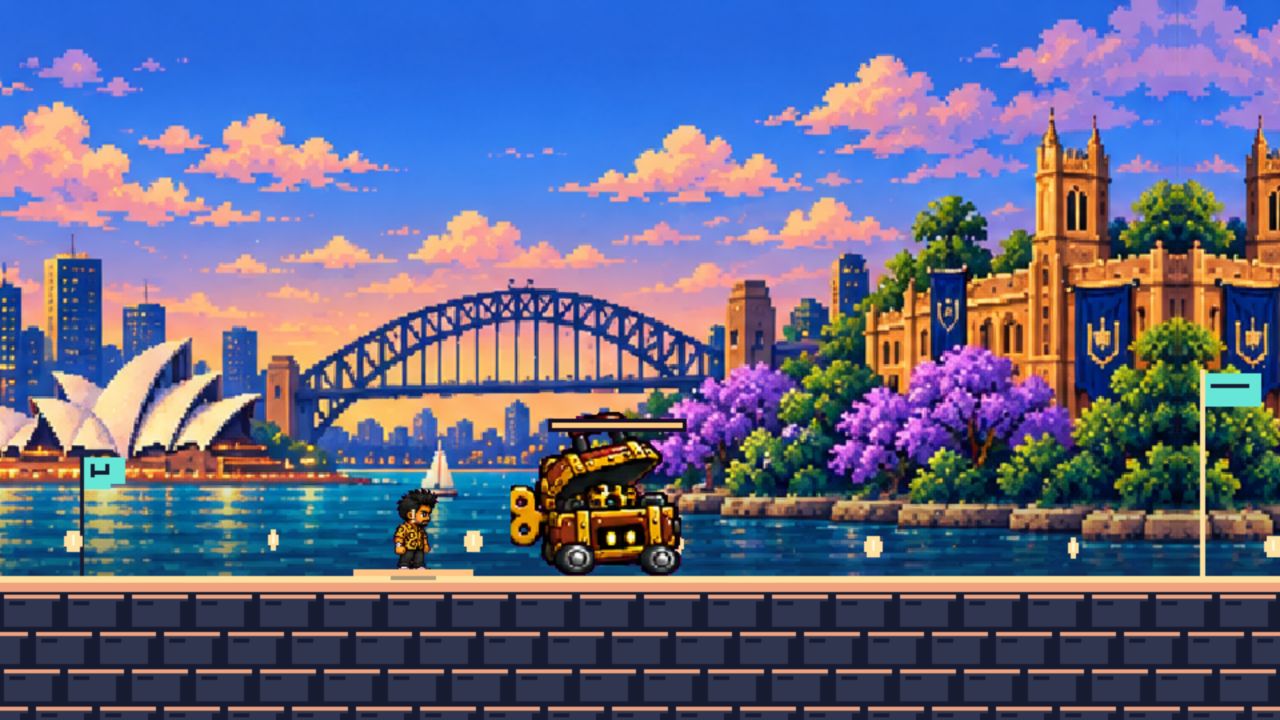
Turning life events into interactive storytelling
Building a game around your own life creates an unusual editing problem: you know why every moment matters, but your audience does not.
Graduation, marriage, career changes and travel each need enough context to feel meaningful. The transitions matter too. A scene can contain the correct facts and still move too quickly for someone to connect with it.
That made pacing one of the most interesting parts of the project.
How long should a moment stay on screen? Where should the character pause? When should animation or sound carry the emotion? How much text can someone comfortably absorb while watching a scene?
These are familiar user experience questions in a different setting. They concern attention, comprehension and the relationship between what the creator intends and what someone actually experiences.
The chibi artwork gives these memories a recognisable visual identity. Keeping the existing character style mattered because the story needed to feel like mine.

Building with AI still requires product judgement
I used GPT-6 Astra to help build The Journey.
Working with AI made it possible to explore an ambitious personal idea through code and repeated iteration. It also brought the importance of direction into focus.
I still had to decide which moments belonged in the story, how the experience should feel, and whether each revision represented something I was comfortable sharing.
A working scene is one checkpoint. A scene that feels right takes further judgement.
For me, that connects directly to my work in AI product strategy and delivery. The ability to generate an implementation increases the value of having clear intentions and concrete acceptance criteria.
“Make it more emotional” is difficult to evaluate. Giving an important milestone time to breathe, keeping the character consistent, and making the dialogue readable are decisions you can inspect.
The experience includes the small details
A personal project still has to work for the person using it.
On a phone, controls compete with limited screen space. Browser bars can affect the visible area. Captions need to remain readable. Visitors need an understandable way to enter the experience and choose how they want to follow it.
Those details shape whether someone gets far enough to encounter the story you spent time creating.
As a Product Owner and AI Product Manager, I enjoyed applying the same care to something deeply personal: defining the experience, building it, checking it, and refining the parts that interrupted it.
The Journey gave me a place to bring together product thinking, technical delivery and a milestone I wanted to remember. I explored a related idea in my Blender career graph and interactive 3D portfolio, where the projects behind my career become places to visit.
You can play The Journey or watch Story Mode. I have a particular soft spot for the ending.
What moment from your own life would you turn into an interactive story?
Resources for your own creative project
If you want prompts to experiment with while shaping a creative idea, my Supecoder Ultimate AI Bundle brings together GPT prompts, AI art prompts, ebooks and planners. It is a separate paid resource for exploring content ideas; it does not include The Journey’s source code or game assets.
For a project that needs product direction and delivery support, you can talk to me about your idea.